
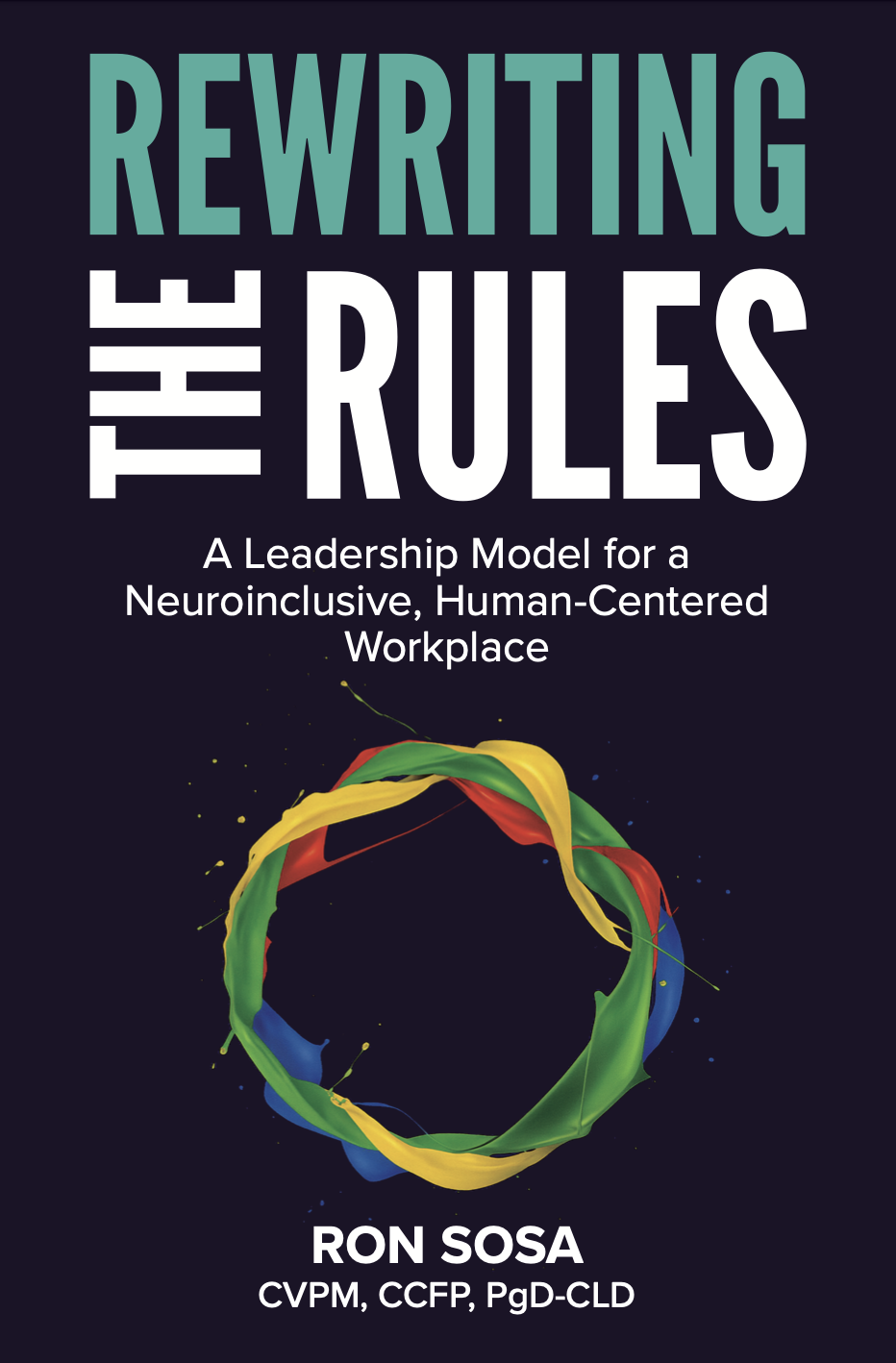
Rewriting the Rules
Ron Sosa, CVPM, CCFP, PgD-CLD
SOCIAL MEDIA ASSETS
PRESS RELEASE
SAMPLE CHAPTER
-
-
Ron Sosa (he/him) is a neurodivergent life and leadership coach, consultant, and international speaker. Ron’s career has taken him from starting out as a client service representative to practice manager to minority business partner, through collaborations with Dr. Andy Roark and the Uncharted Veterinary Conference, and now into his current role as founder of Syn-APT Neuroinclusive Leadership & Coaching. Ron now leads with a passion for systems-thinking, radical empathy, and inclusive design.
Diagnosed with ADHD and autism as an adult, Ron brings a deeply personal understanding of what it means to lead while unmasking. He founded Syn-APT: Neuroinclusive Leadership, a coaching and consulting practice dedicated to transforming workplaces into environments where neurodivergent professionals can thrive without compromising who they are.
Ron is a Jay Shetty-certified life coach and an unapologetic believer in the power of storytelling, community, and inner work. His leadership philosophy is grounded in curiosity, compassion, courage, and a belief that the best leaders don’t seek to control people but to co-create systems where everyone can lead.
When not writing or coaching, you can find Ron surrounded by his pack of dogs, exploring creative expression, or daydreaming about future collaborations. You can learn more about his work and offerings at syn-apt.me.
May you never lead alone.
-
Access photos of Ron Sosa at THIS LINK.
-
Origin Story and Personal Journey
You’ve said the problem wasn’t you; it was the system. What led you to that realization?
How did your late diagnoses of ADHD and autism reshape how you understand leadership?
You describe your career as successful but exhausting. What was the cost of that success?
What did “masking” look like for you in leadership roles before you had the language for it?
Was there a specific moment when you realized you wanted to “rewrite the rules”?
Core Message of the Book
What do you mean by “performative leadership,” and why is it so harmful?
Why do you believe traditional leadership models are failing today’s workforce?
You say this isn’t a book about neurodiversity but written through it. What does that mean?
What are the hidden costs of workplaces that reward performance over presence?
If you had to summarize the book in one sentence, what would it be?
The R.I.S.E. Framework
Can you walk us through the R.I.S.E. model, Reflect, Implement, Sustain, Elevate?
Which part of the framework do leaders struggle with most, and why?
How can leaders begin to “reflect” in environments that don’t encourage self-awareness?
What does “sustain” look like in a workplace that’s already experiencing burnout?
How does “elevate” go beyond individual leadership into system-level change?
Neuroinclusive Leadership
What does a truly neuroinclusive workplace look like in practice?
What are some common mistakes leaders make when trying to support neurodivergent employees?
How can leaders move from accommodation to genuine inclusion?
Why is neuroinclusion not just a “nice to have,” but a leadership imperative?
How does your framework support both neurodivergent and neurotypical employees?
Burnout, Masking, and Emotional Regulation
You connect burnout to system design. Can you explain that?
How does emotional regulation show up in leadership, and why is it often overlooked?
What are the signs that a leader or a team is operating in “performance mode” rather than authenticity?
Why do so many leaders feel they have to suppress parts of themselves to succeed?
What’s one small shift a leader can make today to reduce burnout on their team?
Redefining Professionalism
You challenge traditional ideas of professionalism. What needs to change?
How has “professionalism” been used to exclude or limit people?
What does human-centered professionalism look like instead?
How can organizations redefine success beyond productivity and output?
Practical Application
For a leader listening right now, where should they start?
What’s one immediate action leaders can take to build a more inclusive team culture?
How can managers have better conversations with employees who are struggling?
What does a neuroinclusive meeting look like in practice?
How do you implement change in organizations resistant to new leadership models?
For Organizations and Executives
What would you say to a CEO who believes their current leadership model is “working”?
How can organizations measure whether they are truly inclusive?
What’s the business case for neuroinclusive leadership?
How can HR leaders champion this shift without overwhelming the organization?
Broader Impact and Vision
What does the future of leadership look like if we truly “rewrite the rules”?
How do you hope this book changes conversations in the workplace?
What kind of leaders will thrive in the next decade?
What happens if organizations don’t make this shift?
Personal Reflection and Connection
Who is this book really for?
What would you say to someone who feels like they’re “too much” or “not enough” at work?
What part of this book was the hardest for you to write?
What do you hope readers feel after finishing the book?
How has writing this book changed you as a leader?
Closing / Signature Questions
What’s one leadership rule you believe needs to be retired immediately?
If you could redefine leadership in one word, what would it be?
Where can people learn more about your work and get the book?
Bonus: High-Impact “Soundbite” Questions (Great for Media)
“Is burnout a personal failure or a leadership failure?”
“Why is masking the biggest hidden problem in leadership today?”
“What’s one leadership habit we need to unlearn immediately?”
“What does it mean to lead like a human, not a role?”