
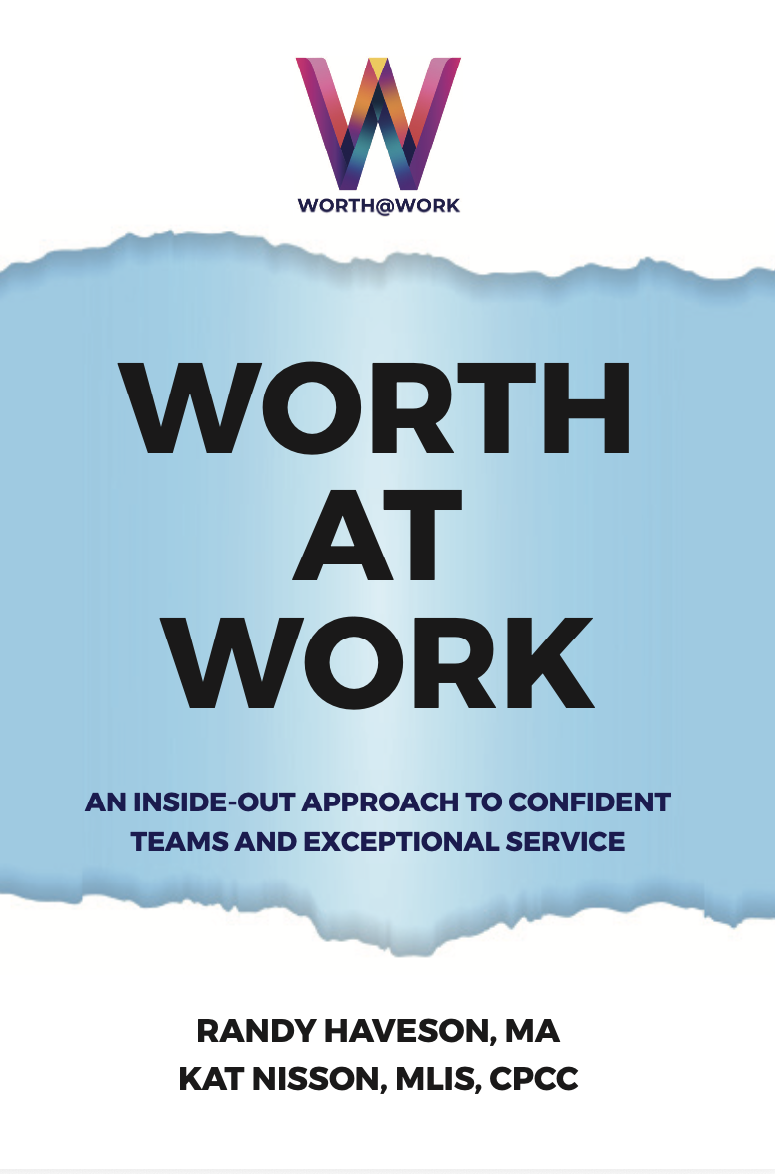
Worth at Work
Randy Haveson, MA and Kat Nisson, MILS, CPCC
SOCIAL MEDIA ASSETS
PRESS RELEASE
SAMPLE CHAPTER
-
-
For more than two decades, Kat Nisson worked in public service, leading teams and serving communities through libraries and nonprofits. She knows what frontline work asks of people, and she knows what it quietly costs them. That experience sits underneath everything in Worth at Work.
She has spent years as a ghostwriter, helping other authors shape nonfiction books on everything from narrative cookbooks to mental health and autism resources. Worth at Work is the first time her own name is on the cover, and she's glad it landed on this one.
As the VP of Everything at Worth@Work, Kat works alongside Randy Haveson to bring his self-worth philosophy into real workplaces. Most of what she does happens behind the scenes: building the systems, scripts, and frameworks that bring exceptional service and humanity together. She holds a Master's in Library and Information Science and is a Certified Professional Career Coach credentialed through PARWCC. The people she cares about most are the ones doing hard, public-facing work who deserve to feel that they matter. -
Hospitality and other service industries have invested heavily in training, yet burnout and turnover remain high. What are organizations missing?
You argue that service excellence starts with the internal experience of employees. What do you mean by that, and why is it so important?
The book introduces the concept of the "bully voice" and the "best friend voice." What are those voices, and how do they affect workplace performance?
Randy, you've spent decades helping people build self-esteem. What's the difference between genuine self-esteem and ego, and why does that distinction matter at work?
One of the most intriguing concepts in the book is the "energy ball." What is it, and how does it influence the way we interact with customers, guests, and coworkers?
Many leaders focus on what employees are doing. You encourage leaders to focus on how employees are experiencing their work. Why?
Kat, you've worked extensively with people navigating workplace trauma and leadership challenges. What are some signs that an organization is unintentionally draining its people?
The book talks about psychological safety as the soil where worth grows. What does psychological safety actually look like in practice?
You write that service is no longer just about what people do; it's about how they show up while doing it. Can you explain that idea?
What role does leadership play in creating environments where people can perform at a high level without burning out?
The principles in the book were developed in hospitality, but you argue they apply much more broadly. Which industries do you believe can benefit most from this message?
One of your core ideas is "We Over Me." How can organizations foster collaboration and collective confidence without sacrificing individual accountability?
What's one mistake organizations make when trying to improve employee engagement and retention?
If a manager listening today wanted to improve team morale immediately, what's one action they could take this week?
What do you hope readers will think, feel, or do differently after reading Worth at Work?
BONUS QUESTIONS
How did the two of you come together to write this book?
What surprised you most while writing Worth at Work?
Was there a moment in your own careers that inspired the ideas behind this book?
What's one myth about burnout, motivation, or service excellence that you would like to debunk?
If listeners remember only one message from this conversation, what do you hope it is?
